5th Workshop on Awareness and Reflection in Technology Enhanced Learning
UPDATE: Extended paper submission deadline: July 10th 2015 The 5th Workshop on Awareness and Reflection in Technology Enhanced Learning (ARTEL 2015) will be held in […]
UPDATE: Extended paper submission deadline: July 10th 2015 The 5th Workshop on Awareness and Reflection in Technology Enhanced Learning (ARTEL 2015) will be held in […]

This is what Nuno Guarda, Head of Corporate Affairs for Cisco in the UK and Ireland, tweeted yesterday after a very successful event held […]

A new book edited by Sylvana Kroop, Martin Wolpers and me has just been published by Springer. The book is entitled “Responsive […]

The first issue of the Video Journal of Open Education has just been published. This issue is dedicated to presenting the presentations […]

Alexander Mikroyannidis represented the weSPOT project last week at the IEEE International Conference on Web & Open Access to Learning (ICWOAL), which […]

The FORGE project has the ambitious aim to transform FIRE (Future Internet Research and Experimentation) into a learning resource – making world […]

Alexander Mikroyannidis delivered a workshop last week at the PLE 2014 conference, which took place in Tallinn, Estonia. The Personal Learning Environments […]

New submission deadline: July 10th 4th Workshop on Awareness and Reflection in Technology-Enhanced Learning (ARTEL 2014) to be held in the context […]
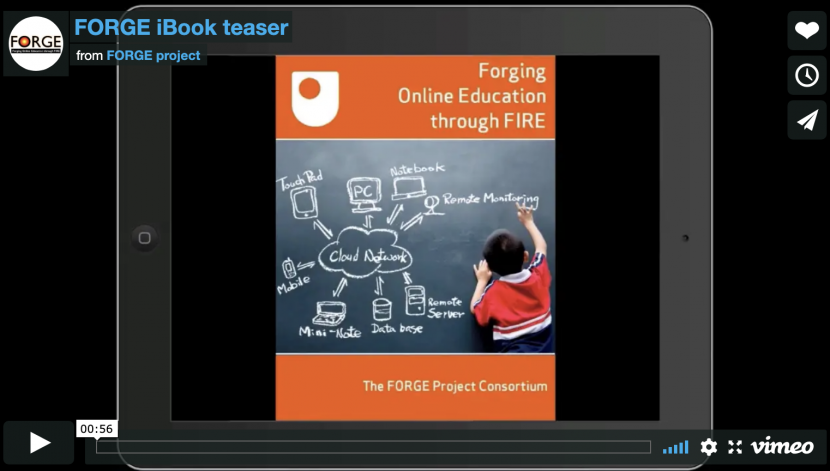
The teaser video of the FORGE iBook gives you a taste of the learning materials and interactive elements included in the iBook […]

I was in Seoul last week for the 23rd World Wide Web conference. This year, the WWW conference was hosted in the […]
Dr. Alexander Mikroyannidis is a Senior Research Fellow (Associate Professor) in the Knowledge Media Institute of The Open University, UK. He holds a Ph.D. in Informatics from Manchester Business School, an M.Phil. in Computation from the University of Manchester Institute of Science and Technology (UMIST), and a B.Eng. in Electrical and Computer Engineering from the University of Patras, Greece.
The research expertise of Dr. Mikroyannidis is in the field of Technology-Enhanced Learning. He has been investigating the use of novel educational technologies for enhancing personalised learning, self-regulated learning, lifelong learning, as well as open education. He is currently exploring the responsible integration of Generative AI into online and distance education contexts for improving learner outcomes. His publications have received over 2,000 citations (23 h-index). He sits on the editorial boards of globally renowned scientific journals, including Open Learning, Cogent Education, and Research in Learning Technology.
The current research of Dr. Mikroyannidis is focused on harnessing Generative AI to support learner autonomy, personalisation, and metacognitive capability in digital education. This line of research has produced metaheutagogy, a framework that goes beyond pedagogy, andragogy, and heutagogy by positioning AI as a reflective and dialogic partner in learning. Additionally, Dr. Mikroyannidis is investigating the potential of Generative AI to support curriculum development and improve the production of distance learning materials, as outlined in this conference publication.
Dr. Mikroyannidis has extensive experience in developing rich interactive learning materials for Open Educational Resources (OERs), Massive Open Online Courses (MOOCs), Badged Open Courses (BOCs), and eBooks. Some highlights from this work include the online courses Decentralising Education Using Blockchain Technology and Exploring how to (re)use Language Open Educational Resources (OERs). In recognition of this experience, Dr. Mikroyannidis has been appointed International Expert in Distance Learning by the Agency for the Assessment and Accreditation of Higher Education (A3ES), Portugal’s national authority for quality assurance in higher education. In this role, Dr. Mikroyannidis is contributing to the assessment of distance learning programmes across Portuguese universities, and advising A3ES on best practices in distance learning, including the use of emerging technologies such as AI and Blockchain.
The work of Dr. Mikroyannidis has led to strategic partnerships with key technological companies, most notably with Cisco and its global educational network, the Cisco Networking Academy, which has over 1 million students worldwide. Within this partnership, Dr. Mikroyannidis is in charge of the design, development and deployment of PT Anywhere, a novel educational tool for teaching computer networking skills by performing network simulations on any device. PT Anywhere has played a vital role in remote teaching and learning during the COVID-19 pandemic, and has been featured in the UK government’s Digital Skills Toolkit, which is offering essential digital skills to job seekers.
Dr. Mikroyannidis has led a successful pilot for facilitating lifelong learning using blockchain technologies, in the context of the European project QualiChain. In particular, he has been in charge of deploying and evaluating decentralised education and employment qualifications with learners and educators within various lifelong learning contexts. The results of this pilot are presented in this journal article. Additionally, Dr. Mikroyannidis has been investigating the impact of Web 3.0 and Blockchain on the open upskilling and reskilling of job seekers, as outlined in this journal editorial co-authored with several other renowned experts in the field of open education.
Dr. Mikroyannidis has been driving significant educational technology initiatives at an international level, by establishing a network of collaborators inside and outside the Open University and acquiring external funding, in order to implement and evaluate novel educational solutions in real-life settings and with real users. He has been awarded and worked on a wide range of European and nationally funded research projects, including SAGE-RAI, QualiChain, DEL4ALL, OpenLang Network, Open Networking Lab, Institute of Coding, SlideWiki, EDSA, HUB4NGI, FORGE, weSPOT, EUCLID, ROLE, OpenScout, CASPAR, and PARMENIDES.
In collaboration with the European partners of the Erasmus+ project OpenLang Network, Dr. Mikroyannidis has led the design, implementation and evaluation of the OpenLang Network platform, building a sustainable online community around open educational resources and practices. This journal article explores the opportunities that Generative AI offers for enhancing the OpenLang Network platform and its language learning services. Through a pedagogically informed integration of Generative AI, this work demonstrates how AI can enhance openness, collaboration, and personalisation in language learning.