Raw Data Now in the UK
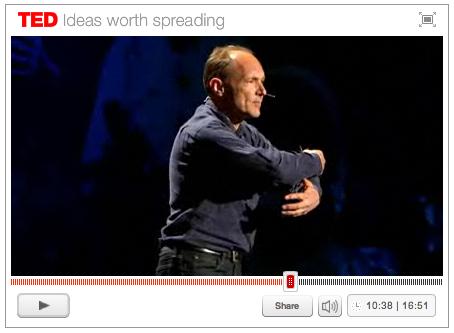
Good news from the Raw Data Now front. Tim Berners-Lee has been asked by Gordon Brown to help open up access to […]
EdTech blog by Alexander Mikroyannidis
EdTech blog by Alexander Mikroyannidis
Good news from the Raw Data Now front. Tim Berners-Lee has been asked by Gordon Brown to help open up access to […]

Being a major content owner, the BBC is using Semantic Web technologies to efficiently manipulate this content and improve the services offered […]
Dr. Alexander Mikroyannidis is a Senior Research Fellow (Associate Professor) in the Knowledge Media Institute of The Open University, UK. He holds a Ph.D. in Informatics from Manchester Business School, an M.Phil. in Computation from the University of Manchester Institute of Science and Technology (UMIST), and a B.Eng. in Electrical and Computer Engineering from the University of Patras, Greece.
The research expertise of Dr. Mikroyannidis is in the field of Technology-Enhanced Learning. He has been investigating the use of novel educational technologies for enhancing personalised learning, self-regulated learning, lifelong learning, as well as open education. He is currently working on the transformative applications of Generative AI and decentralisation blockchain technology in the context of distance and higher education. He is the author of over 120 peer-reviewed publications that have received over 1,500 citations.
Dr. Mikroyannidis has extensive experience in developing rich interactive learning materials for Open Educational Resources (OERs), Massive Open Online Courses (MOOCs), Badged Open Courses (BOCs), and eBooks. Some highlights from this work are the following:
The work of Dr. Mikroyannidis has led to strategic partnerships with key technological companies, most notably with Cisco and its global educational network, the Cisco Networking Academy, which has over 1 million students worldwide. Within this partnership, Dr. Mikroyannidis is in charge of the design, development and deployment of PT Anywhere, a novel educational tool for teaching computer networking skills by performing network simulations on any device. PT Anywhere has played a vital role in remote teaching and learning during the COVID-19 pandemic, and has been featured in the UK government’s Digital Skills Toolkit, which is offering essential digital skills to job seekers.
Dr. Mikroyannidis has recently led a successful pilot for facilitating lifelong learning using blockchain technologies, in the context of the European project QualiChain. In particular, he has been in charge of deploying and evaluating decentralised education and employment qualifications with learners and educators within various lifelong learning contexts. The results of this pilot have provided valuable insights into the different aspects of lifelong learning that require support, as well as into the guidance and training needs of the education community related to the use of decentralisation technologies. More recently, Dr. Mikroyannidis has been investigating the impact of Web 3.0 and Blockchain on open education, aiming to reduce barriers for the open upskilling and reskilling of job seekers. For more info, see this journal editorial co-authored with several other renowned experts in the field of open education.
Dr. Mikroyannidis has been driving significant educational technology initiatives at an international level, by establishing a network of collaborators inside and outside the Open University and acquiring external funding, in order to implement and evaluate novel educational solutions in real-life settings and with real users. He has been awarded and worked on a wide range of European and nationally funded research projects, including QualiChain, DEL4ALL, OpenLang Network, Open Networking Lab, Institute of Coding, SlideWiki, EDSA, HUB4NGI, FORGE, weSPOT, EUCLID, ROLE, OpenScout, CASPAR, and PARMENIDES.
In collaboration with the European partners of the Erasmus+ project OpenLang Network, Dr. Mikroyannidis has led the design, implementation and evaluation of the OpenLang Network platform. This platform provides an open and collaborative online learning environment that brings together language teachers and learners across Europe. This journal article presents the sustainable design of the platform and the tools that the platform is offering for practicing innovative learning methods, such as tandem language learning. The goal of this work is to foster the European multicultural and multilingual vision by building a sustainable online community around open educational resources and practices.
You must be logged in to post a comment.